Walking Through Ancient Ephesus: The Ultimate Guide for History Enthusiasts in Turkey
The moment your feet touch the marble-paved streets of Ephesus, you’re walking the same path that Cleopatra, Mark Antony, and St. Paul once trod. This isn’t just another archaeological site—it’s a 2,000-year-old time capsule where the Roman Empire still breathes through weathered columns, intricate mosaics, and the whispers of ancient voices echoing through the Library of Celsus.
Located just 3 kilometers from the modern town of Selçuk in western Turkey, Ephesus stands as one of the best-preserved classical cities in the Mediterranean. For history enthusiasts, this UNESCO World Heritage site offers an unparalleled journey into antiquity, where every stone tells a story of Roman grandeur, Greek philosophy, and early Christian faith.
The Marble Street: Your Gateway to Ancient Roman Life
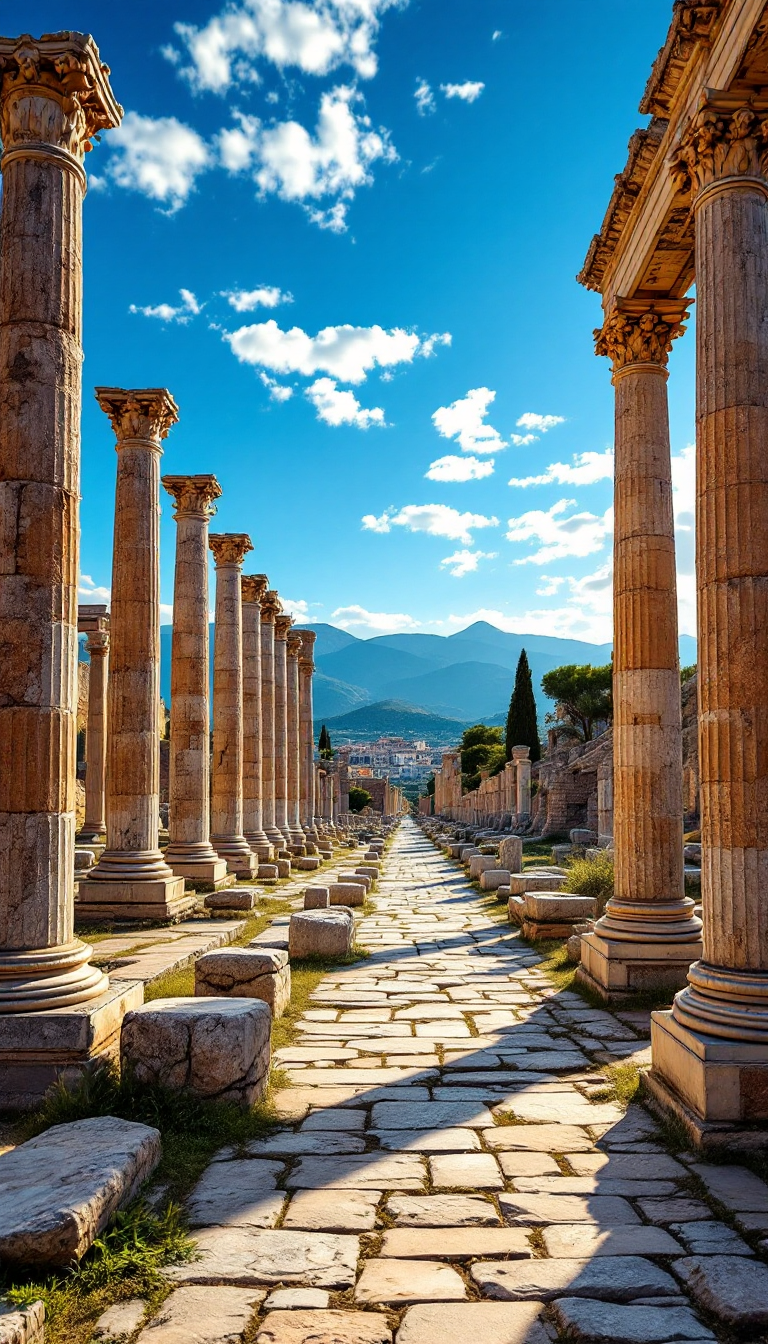
Begin your exploration at the Upper Gate (Magnesia Gate), where the well-preserved Marble Street descends through the heart of the ancient city. This gleaming thoroughfare, polished smooth by millennia of footsteps, stretches 600 meters downhill, connecting the city’s most significant monuments. The marble slabs beneath your feet date to the 5th century AD, installed during Emperor Arcadius’s reign.
As you walk, notice the deep grooves carved into the marble—these are ancient wheel ruts from Roman chariots and carts that transported goods through the bustling metropolis. Along the street’s edges, examine the sophisticated drainage system that channeled rainwater and sewage, showcasing Roman engineering brilliance that wouldn’t be matched for another thousand years.
The street lamps’ pedestals still stand at regular intervals, and you can spot the remains of columned porticos that once provided shade for pedestrians during Ephesus’s scorching summers. Look closely at the marble blocks for ancient graffiti and merchant marks—tangible connections to the 250,000 people who called this city home.
The Library of Celsus: Architectural Marvel and Knowledge Temple
The façade of the Library of Celsus rises before you like a vision from classical antiquity—arguably the most photographed monument in all of Turkey and rightfully so. Built in 117 AD by Gaius Julius Aquila as a memorial to his father, Senator Tiberius Julius Celsus Polemaeanus, this building once housed 12,000 scrolls, making it the third-largest library in the ancient world after Alexandria and Pergamum.
The two-story marble façade stands 16 meters high, featuring nine windows and three doorways adorned with Corinthian and Composite capitals. The four niches between the columns contain replica statues representing the Four Virtues: Sophia (Wisdom), Arete (Valor), Ennoia (Thought), and Episteme (Knowledge). The originals now reside in Vienna’s Ephesus Museum.
What many visitors miss: the library sits directly atop Celsus’s tomb. The reading room was built on a raised platform above the sarcophagus—an honor reserved for the most distinguished citizens. The building also features an ingenious double-wall design that protected the precious scrolls from humidity and temperature fluctuations.
Visit in the early morning hours between 8:00-9:00 AM when the eastern sun illuminates the façade’s intricate details and casts dramatic shadows across the Corinthian columns. The low-angle light reveals sculptural depth that disappears in harsh midday sun.
The Great Theatre: Where History Became Drama
Carved into the slopes of Mount Pion, the Great Theatre of Ephesus could accommodate 25,000 spectators—roughly 10% of the city’s population. Construction began during the Hellenistic period under Lysimachus, but the Romans expanded it to its current grandeur during the 1st century AD under Emperor Claudius and later Trajan.
Climb to the upper tiers (cavea) for breathtaking views down the ancient Harbor Street toward where the Aegean Sea once lapped at Ephesus’s docks. The theatre’s acoustics remain so precise that a coin dropped on the stage can be heard from the top row—a testament to Greek and Roman acoustic engineering.
This theatre witnessed pivotal historical moments. In 57 AD, the Apostle Paul preached here, sparking the riot of the silversmiths described in Acts 19:23-41, when craftsmen feared his teachings would undermine the worship of Artemis and destroy their lucrative trade in silver idols. Standing on these ancient seats, you can almost hear the crowd’s roar: ‘Great is Artemis of the Ephesians!’
Look for the stage building (scaenae frons) remains, which once stood three stories high with elaborate marble decoration. The orchestra pit still shows traces of its original marble paving, and beneath the stage, tunnels allowed actors and wild animals to make dramatic entrances during performances and gladiatorial contests.
The Temple of Hadrian and Terrace Houses: Intimate Glimpses of Daily Life
Along Curetes Street, the Temple of Hadrian presents one of Ephesus’s most elegant structures. Built before 138 AD to honor Emperor Hadrian’s visit, this small but exquisitely decorated temple features a distinctive arch with a relief of Tyche (Fortune) in the keystone and elaborate friezes depicting the founding myths of Ephesus.
Just beyond, invest the additional 100 Turkish Lira (separate ticket required) to enter the Terrace Houses—absolutely essential for serious history enthusiasts. These luxury residences, inhabited from the 1st century BC to the 7th century AD, housed Ephesus’s wealthiest citizens. Protected under modern roofing, ongoing excavations and restoration work continue to reveal spectacular frescoes, intricate mosaics, and sophisticated heating and plumbing systems.
The frescoes in House 2 rival those of Pompeii, featuring mythological scenes, theatrical masks, and elaborate geometric patterns. The mosaics display everything from simple black-and-white designs to complex polychrome compositions depicting Dionysus, ocean creatures, and daily life scenes. The marble-clad walls, underfloor heating (hypocaust system), and private latrines reveal the sophisticated lifestyle of Ephesus’s elite class.
Beyond the Main Site: The Temple of Artemis and Ephesus Archaeological Museum
No visit to Ephesus is complete without acknowledging what’s missing. The Temple of Artemis, one of the Seven Wonders of the Ancient World, once stood northeast of the main archaeological site. Today, only a single reconstructed column marks where this magnificent structure—four times larger than the Parthenon—dominated the landscape for over 600 years.
The temple was destroyed multiple times: burned by Herostratus in 356 BC (the night Alexander the Great was born), rebuilt, then finally demolished by Christian zealots in 401 AD. Visit the site in Selçuk town to understand the scale and see the marshy area where archaeologists discovered the foundation in 1869.
The Ephesus Archaeological Museum in Selçuk houses treasures that bring context to the ruins. The star attraction is the magnificent statue of Artemis Ephesia, the many-breasted fertility goddess whose worship made Ephesus one of antiquity’s most important religious centers. The museum also displays artifacts from the Terrace Houses, including stunning frescoes, glass objects, and the famous Eros statue.
Allocate at least 90 minutes for the museum, preferably after visiting the ruins when you can better appreciate the artifacts’ original contexts. The museum is open daily except Mondays, 8:00 AM to 7:00 PM in summer.
Practical Wisdom for Your Ephesus Experience
Timing is everything at Ephesus. Arrive when gates open at 8:00 AM in peak season (April-October) or visit during winter months (November-March) when temperatures are comfortable, crowds minimal, and the site’s atmospheric quality intensifies under dramatic cloud formations. The site closes at 7:00 PM in summer, 5:00 PM in winter.
Wear sturdy, broken-in walking shoes—the marble streets are uneven and slippery when wet. A sun hat, high-SPF sunscreen, and at least 2 liters of water per person are essential, as shade is limited and summer temperatures regularly exceed 35°C (95°F). No food vendors operate within the site.
Hire an official licensed guide at the entrance (approximately 400-600 Turkish Lira for 2 hours) or invest in a quality audio guide. The difference between wandering past ruins and understanding their historical significance cannot be overstated. For deeper insights, consider specialized guides who focus on early Christian history, Roman engineering, or classical archaeology.
Photography is permitted throughout, but tripods require special permission. The best light for photography occurs during the golden hours: 7:00-9:00 AM when eastern monuments glow, and 5:00-7:00 PM when western structures come alive. Bring a polarizing filter to manage Turkey’s intense sunlight and enhance the blue sky against white marble.
Where to Stay: Selçuk’s Historic Hospitality
The town of Selçuk, just 3 kilometers from Ephesus, offers superior accommodation options compared to the larger resort city of Kuşadası. For history enthusiasts, staying in Selçuk allows early morning access to the ruins before tour buses arrive and provides evening strolls through a town rich with Byzantine and Ottoman heritage.
The Nilya Hotel, housed in restored Greek houses, offers boutique accommodation with Ephesus views from the rooftop terrace. The Australian-Turkish owners are passionate about local history and provide invaluable touring advice. Akanthus Hotel features traditionally decorated rooms around a central courtyard, and the owners arrange private archaeological tours with academic specialists.
For luxury seekers, the Charisma De Luxe Hotel offers modern amenities while maintaining Turkish architectural character. Budget travelers will find excellent value at Homeros Pension, where the family-run hospitality includes home-cooked breakfasts and genuine local insights.
Connecting the Historical Threads: What Makes Ephesus Extraordinary
Ephesus embodies the crossroads of civilizations. Founded by Greek colonists in the 10th century BC, it flourished under Lydian, Persian, Hellenistic, Roman, and Byzantine rule. This layering of cultures created an archaeological palimpsest where you can trace the evolution of urban planning, architecture, religion, and daily life across 1,500 years.
The city’s significance extends beyond its impressive physical remains. Ephesus was where classical Greek philosophy met Roman pragmatism, where pagan worship transformed into early Christianity, where East encountered West on the trade routes connecting Europe to Asia. The Apostle Paul lived here for three years, writing his letters to the Corinthians. The Virgin Mary may have spent her final years in a house on nearby Bülbül Mountain. The Gospel of John was likely written here.
Walking through Ephesus isn’t merely observing ruins—it’s witnessing the foundations of Western civilization. The democratic institutions, urban planning principles, architectural innovations, and philosophical traditions that emerged here continue shaping our world today.
As you exit through the Lower Gate near the ancient harbor, turn back for one final view. The marble columns rising against the Turkish sky stand as testimony to human ambition, creativity, and the enduring power of history to connect us across millennia.
Ready to walk through history yourself? Book your journey to Ephesus and experience Turkey’s ancient wonders firsthand on deuxtravel.com, where every destination connects you to the stories that shaped our world.